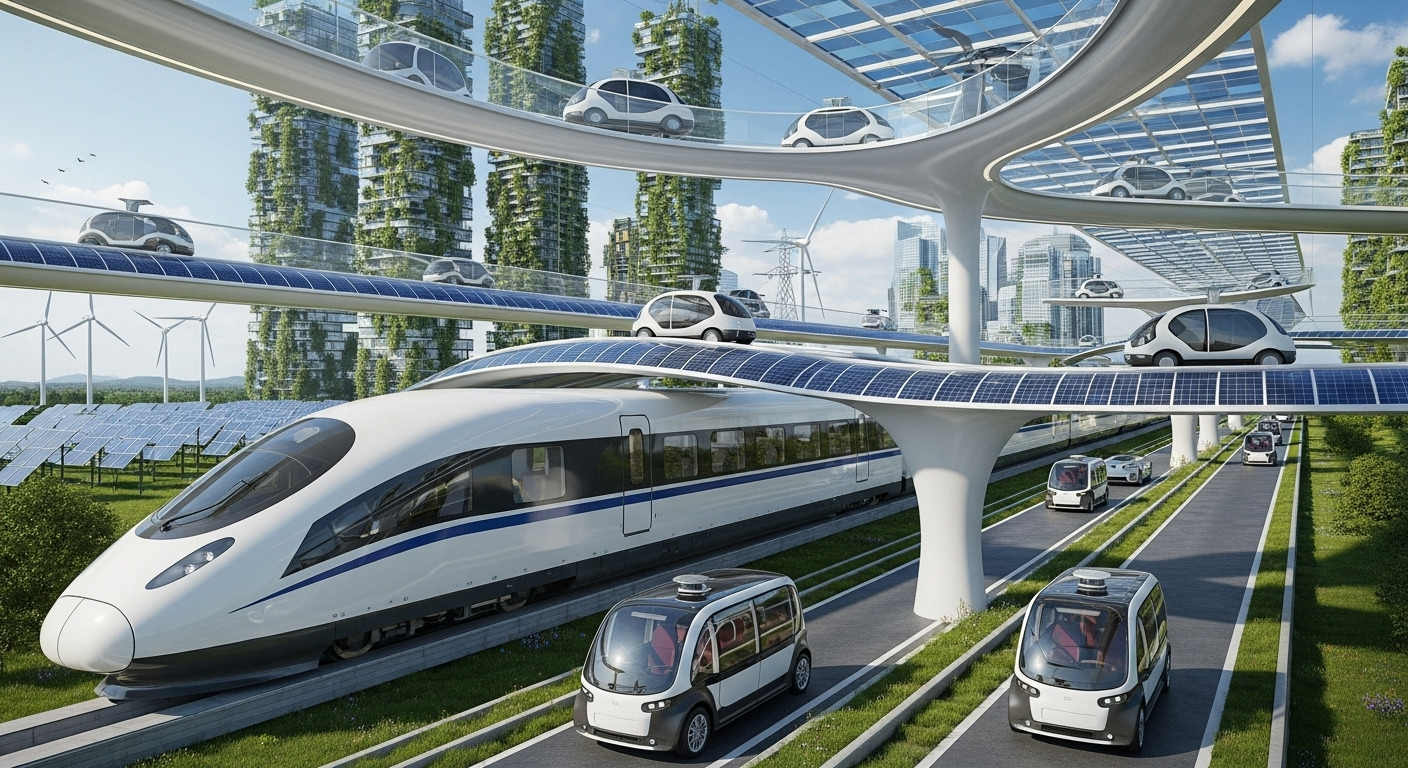
교통 수단의 발전은 인류 문명의 진보와 함께해 왔습니다. 오늘날 우리는 자율주행차, 전기차, 하이퍼루프, 도심 항공 모빌리티 등 혁신적인 교통 기술의 등장을 목격하고 있습니다. 이러한 미래형 교통 시스템은 더 빠르고 안전하며 친환경적인 이동 수단을 제공하면서, 도시의 교통 문제를 근본적으로 해결하고 있습니다.
전기차 시대의 본격화
전기 자동차는 더 이상 미래의 기술이 아닌 현실입니다. 배터리 기술의 발전으로 주행 거리가 늘어나고 충전 시간이 단축되면서, 전기차는 실용적인 대안으로 자리잡았습니다. 각국 정부는 충전 인프라를 확충하고 구매 보조금을 지원하며 전기차 보급을 가속화하고 있습니다. 배기가스 제로 배출은 도시 공기질 개선에 크게 기여하며, 소음 공해도 줄어들고 있습니다.
자율주행 기술의 진화
인공지능과 센서 기술의 발전으로 자율주행차가 현실화되고 있습니다. 레이더, 라이다, 카메라 등 다양한 센서가 주변 환경을 실시간으로 인식하고, AI는 안전한 주행 경로를 판단합니다. 자율주행 기술은 인간의 실수로 인한 교통사고를 획기적으로 줄일 수 있으며, 고령자와 장애인에게 독립적인 이동 수단을 제공합니다. 또한 차량 간 통신을 통해 교통 흐름이 최적화되어 정체가 감소합니다.
공유 모빌리티와 스마트 교통
개인 차량 소유에서 공유 이용으로의 패러다임 전환이 일어나고 있습니다. 카셰어링, 전동 킥보드, 자전거 공유 서비스 등 다양한 공유 모빌리티가 확산되면서 도시의 차량 수가 감소하고 주차 공간 문제가 해결되고 있습니다. 모바일 앱을 통해 실시간으로 최적의 이동 수단을 선택할 수 있으며, 대중교통과의 연계도 원활해지고 있습니다.
고속철도와 초고속 교통망
고속철도는 도시 간 이동의 주요 수단으로 자리매김하고 있습니다. 시속 300km 이상의 속도로 안전하고 편안한 여행을 제공하며, 항공기에 비해 탄소 배출량이 현저히 낮습니다. 한편 하이퍼루프와 같은 차세대 초고속 교통 수단은 진공 튜브 내에서 시속 1000km 이상의 속도를 구현하여 장거리 이동 시간을 혁신적으로 단축할 것으로 기대됩니다.
도심 항공 모빌리티의 등장
전기 수직 이착륙기(eVTOL)를 활용한 도심 항공 모빌리티는 교통 혼잡이 심한 대도시의 새로운 해법으로 주목받고 있습니다. 하늘을 이용한 3차원 교통망은 지상 교통의 부담을 줄이고, 출퇴근 시간을 획기적으로 단축할 수 있습니다. 전기 추진 시스템을 사용하여 환경 친화적이며, 소음도 기존 헬리콥터에 비해 현저히 낮습니다.
친환경 대중교통의 확대
전기 버스, 수소 버스, 트램, 경전철 등 친환경 대중교통 수단이 확대되고 있습니다. 대중교통 우선 차로와 신호 체계를 통해 정시성과 편의성이 향상되고, 스마트 정류장에서는 실시간 도착 정보와 다양한 편의 시설을 제공합니다. 접근성이 개선된 대중교통은 더 많은 사람들이 개인 차량 대신 친환경적인 이동 수단을 선택하도록 유도합니다.
스마트 인프라와 교통 관리
사물인터넷 센서와 빅데이터 분석을 통해 실시간 교통 상황을 모니터링하고 관리합니다. 스마트 신호등은 교통량에 따라 신호 시간을 조절하고, 교통 정보 시스템은 운전자에게 최적의 경로를 안내합니다. 도로 상태, 기상 조건, 사고 정보 등이 실시간으로 공유되어 안전하고 효율적인 교통 환경이 조성됩니다.
모두를 위한 이동의 자유
미래형 교통 시스템은 단순히 기술의 발전을 넘어, 모든 사람이 안전하고 편리하게 이동할 수 있는 포용적인 사회를 만드는 것을 목표로 합니다. 환경을 보호하면서도 경제적 효율성을 높이고, 개인의 이동 자유를 보장하면서도 공동체의 이익을 추구하는 균형 잡힌 교통 정책이 필요합니다. 지속 가능한 교통 시스템 구축을 통해 우리는 더 나은 미래로 나아갈 수 있습니다.
면책 고지
본 블로그의 글은 단순한 참고 자료로 제공되는 것으로, 어떠한 법적·재정적·전문적 책임도 발생하지 않습니다. 제시된 정보의 정확성, 완전성 및 최신성은 보장되지 않으며, 본 자료에 기초하여 행해진 모든 행위에 대한 책임은 전적으로 이용자 본인에게 있습니다. 보다 신뢰할 수 있는 정확한 정보를 원하실 경우, 반드시 관련 공식 사이트 및 전문 자료를 확인하시기 바랍니다.
The development of transportation has accompanied the progress of human civilization. Today, we are witnessing the emergence of innovative transportation technologies such as autonomous vehicles, electric cars, hyperloop, and urban air mobility. These future transportation systems provide faster, safer, and more environmentally friendly means of travel while fundamentally solving urban transportation problems.
The Full-Scale Era of Electric Vehicles
Electric vehicles are no longer future technology but reality. As battery technology advances, driving range increases and charging time decreases, making electric vehicles a practical alternative. Governments worldwide are accelerating electric vehicle adoption by expanding charging infrastructure and providing purchase subsidies. Zero emissions significantly contribute to improving urban air quality, and noise pollution is also decreasing.
Evolution of Autonomous Driving Technology
Autonomous vehicles are becoming reality through the development of artificial intelligence and sensor technology. Various sensors such as radar, lidar, and cameras recognize the surrounding environment in real-time, and AI determines safe driving routes. Autonomous driving technology can dramatically reduce traffic accidents caused by human error and provide independent transportation for the elderly and disabled. Additionally, vehicle-to-vehicle communication optimizes traffic flow, reducing congestion.
Shared Mobility and Smart Transportation
A paradigm shift is occurring from personal vehicle ownership to shared use. As various shared mobility options such as car sharing, electric scooters, and bike-sharing services spread, the number of vehicles in cities decreases and parking space problems are resolved. Mobile apps allow real-time selection of optimal transportation methods, and connection with public transportation is becoming smoother.
High-Speed Rail and Ultra-High-Speed Transportation Networks
High-speed rail is establishing itself as a primary means of intercity travel. Traveling at speeds over 300 km/h provides safe and comfortable journeys, with significantly lower carbon emissions compared to aircraft. Meanwhile, next-generation ultra-high-speed transportation such as hyperloop is expected to achieve speeds over 1000 km/h in vacuum tubes, revolutionarily shortening long-distance travel times.
Emergence of Urban Air Mobility
Urban air mobility using electric vertical takeoff and landing aircraft (eVTOL) is attracting attention as a new solution for congested metropolitan areas. Three-dimensional transportation networks using the sky reduce the burden on ground transportation and can dramatically shorten commute times. Using electric propulsion systems makes them environmentally friendly, with significantly lower noise compared to conventional helicopters.
Expansion of Eco-Friendly Public Transportation
Eco-friendly public transportation such as electric buses, hydrogen buses, trams, and light rail is expanding. Punctuality and convenience are improving through dedicated public transportation lanes and signal systems, and smart bus stops provide real-time arrival information and various amenities. Improved accessibility encourages more people to choose environmentally friendly transportation instead of personal vehicles.
Smart Infrastructure and Traffic Management
Real-time traffic conditions are monitored and managed through IoT sensors and big data analysis. Smart traffic lights adjust signal timing according to traffic volume, and traffic information systems guide drivers to optimal routes. Road conditions, weather conditions, and accident information are shared in real-time, creating a safe and efficient traffic environment.
Freedom of Movement for All
Future transportation systems aim beyond merely technological advancement to create an inclusive society where everyone can move safely and conveniently. Balanced transportation policies are needed that protect the environment while increasing economic efficiency, and guarantee individual freedom of movement while pursuing community benefits. Through building sustainable transportation systems, we can move toward a better future.
Disclaimer
This document is provided solely for informational and reference purposes, and does not create any legal, financial, or professional liability. No guarantee is made regarding the accuracy, completeness, or timeliness of the information provided, and any actions taken based on this document are the sole responsibility of the user. For more reliable and accurate information, please consult the relevant official websites and professional sources.
交通工具的发展一直伴随着人类文明的进步。今天,我们正在见证自动驾驶汽车、电动汽车、超级高铁、城市空中交通等创新交通技术的出现。这些未来交通系统在提供更快、更安全、更环保的出行方式的同时,从根本上解决了城市交通问题。
电动汽车时代的全面到来
电动汽车不再是未来技术,而是现实。随着电池技术的进步,续航里程增加,充电时间缩短,电动汽车已成为实用的替代方案。世界各国政府通过扩建充电基础设施和提供购买补贴来加速电动汽车的普及。零排放极大地改善了城市空气质量,噪音污染也在减少。
自动驾驶技术的演进
通过人工智能和传感器技术的发展,自动驾驶汽车正在成为现实。雷达、激光雷达、摄像头等各种传感器实时识别周围环境,人工智能判断安全的行驶路线。自动驾驶技术可以大幅减少人为失误造成的交通事故,并为老年人和残疾人提供独立的交通工具。此外,通过车辆间通信优化交通流量,减少拥堵。
共享出行和智能交通
正在发生从个人车辆拥有到共享使用的范式转变。随着汽车共享、电动滑板车、自行车共享服务等各种共享出行方式的普及,城市车辆数量减少,停车空间问题得到解决。通过移动应用程序可以实时选择最佳出行方式,与公共交通的衔接也更加顺畅。
高速铁路和超高速交通网络
高速铁路正在成为城市间出行的主要方式。以每小时300公里以上的速度提供安全舒适的旅行,与飞机相比碳排放量显著降低。同时,超级高铁等下一代超高速交通工具预计将在真空管道内实现每小时1000公里以上的速度,革命性地缩短长途旅行时间。
城市空中交通的出现
利用电动垂直起降飞行器(eVTOL)的城市空中交通作为交通拥堵严重的大城市的新解决方案备受关注。利用天空的三维交通网络减轻了地面交通的负担,可以大幅缩短通勤时间。使用电力推进系统环保,噪音也比传统直升机显著降低。
环保公共交通的扩展
电动公交车、氢能公交车、有轨电车、轻轨等环保公共交通工具正在扩大。通过公共交通专用车道和信号系统提高了准点性和便利性,智能站台提供实时到达信息和各种便利设施。改善的可达性鼓励更多人选择环保交通工具而不是私人车辆。
智能基础设施和交通管理
通过物联网传感器和大数据分析实时监控和管理交通状况。智能交通灯根据交通量调整信号时间,交通信息系统为驾驶员提供最佳路线指导。道路状况、天气条件、事故信息等实时共享,营造安全高效的交通环境。
为所有人提供出行自由
未来交通系统的目标不仅仅是技术进步,而是创造一个所有人都能安全便捷出行的包容性社会。需要平衡的交通政策,在保护环境的同时提高经济效率,在保障个人出行自由的同时追求社区利益。通过建设可持续交通系统,我们可以走向更美好的未来。
免责声明
本文件仅作为参考资料提供,不承担任何法律、财务或专业责任。对所提供信息的准确性、完整性及时效性不作任何保证,基于本文件所采取的任何行为均由使用者自行承担全部责任。如需获取更可靠和准确的信息,请务必查阅相关官方网站及专业资料。